

If you feel like you’re at a crossroads in your professional life, you aren’t alone. A growing number of experienced professionals are rethinking what their long-term career paths should look like. The traditional climb up the corporate ladder, once the default definition of success, is being re-evaluated against a backdrop of shifting priorities.
As we look toward 2026, many people are treating this upcoming year not just as another calendar turn, but as a strategic horizon line. It’s a natural checkpoint for reassessing lifestyle needs, income potential, and the level of autonomy you actually have in your day-to-day work.
The core question surfacing in boardrooms and home offices alike is this: Do you stay on the established corporate track, or is it time to pivot into franchise ownership?
There is no universally "better" answer. Both paths offer distinct advantages and trade-offs. The right choice depends entirely on what you want your life to look like three, five, or ten years from now. By breaking down the realities of both options, you can make an informed decision that aligns with your vision for 2026.
Lifestyle Control: Designed Flexibility, Not Zero Responsibility
For many professionals considering a career pivot in 2026, the real motivator isn’t working less, it’s working with intention. In a corporate role, flexibility often exists in theory but not in practice. Even with remote or hybrid setups, your calendar is still shaped by leadership expectations, standing meetings, client escalations, and priorities that aren’t always your own. The freedom looks good on paper, until it doesn’t.
Franchise ownership offers a different kind of flexibility: one that’s built, not granted. To be clear, owning a franchise comes with real responsibility, especially early on. You’re accountable for performance, people, and outcomes. But unlike corporate life, you’re not locked into someone else’s definition of “busy.” As the owner, you control how the business operates day to day. You decide what requires your direct involvement and what can be delegated, systemized, or scheduled around your life.
This is where actual flexibility shows up. In a corporate environment, you may have “flex hours,” but you’re still expected to respond when issues arise, often on someone else’s timeline. In a franchise model, while accountability ultimately sits with you, you also have the authority to design a business structure that doesn’t rely on your constant presence. With the right team, processes, and support system, flexibility becomes intentional, allowing space for family time, travel, and personal priorities without asking permission or justifying your absence.
The shift isn’t from responsibility to freedom; it’s from reactive work to purposeful ownership. For many professionals, that difference changes everything.
Income Ceilings: Salary Stability vs Scalable Earnings
Financial stability is the primary reason many professionals hesitate to leave their corporate roles. The corporate compensation model is predictable: salary bands, annual bonuses, and structured promotions. It provides a level of security that can be comforting. However, your earnings are often capped by budgets and decisions made layers above you. Raises and promotions are subject to timing and organizational charts that are outside your control.
Looking at a franchise opportunity after corporate life shifts the income model entirely. In franchising, earnings are effort-based and scalable. There is no predetermined salary cap. Instead, your income is directly tied to the performance of the business you build. If you drive growth, optimize operations, and expand your customer base, you reap the financial rewards directly.
This dynamic introduces a shift from risk to reward. Corporate salaries offer a floor - a minimum you can expect to earn. Franchising removes the ceiling. For professionals who are confident in their ability to execute and lead, the opportunity to control their own financial growth is a compelling reason to make the switch. You stop waiting for advancement and start creating it.
Equity vs Salary: Building an Asset or Earning a Paycheck
One of the most critical distinctions between employment and ownership is equity. A salary is a transaction: you trade your time and skills for money today. It provides short-term security, but when you leave that role, the income stream stops immediately. You generally don’t take anything with you other than your experience.
Franchise ownership acts as an equity-building vehicle. Every year you spend growing the business, you are building an asset with tangible value. You aren’t just earning a living; you are creating something that can eventually be sold.
This long-term perspective changes how you view your daily work. It brings resale value, exit options, and legacy considerations into the picture. Are you building wealth that can support your retirement or be passed down to your family? For many, this is the deciding factor. The ability to build an asset is why so many seasoned professionals explore franchising as a second-chapter career move. It transforms hard work into lasting value.
Flexibility Comparison: Structure Isn’t the Enemy
A common misconception is that leaving the corporate world for entrepreneurship means total freedom from rules. The reality is that total freedom often leads to chaos. In business, structure isn’t the enemy; it’s the lever that allows you to scale.
Corporate structures are designed to manage large workforces, often resulting in bureaucracy that slows down decision-making. Franchise systems, on the other hand, use structure to accelerate success. When you buy into a franchise, you are investing in a proven playbook. You get the operational systems, marketing strategies, and support networks that independent startups lack.
This "business ownership with a playbook" model offers a middle ground. You get the autonomy of ownership combined with the support of an established brand. You don’t have to reinvent the wheel; you just have to drive the car. This allows you to focus your energy on growth and leadership rather than getting bogged down in trial-and-error operational setups.
Why Franchising Appeals to Corporate Professionals
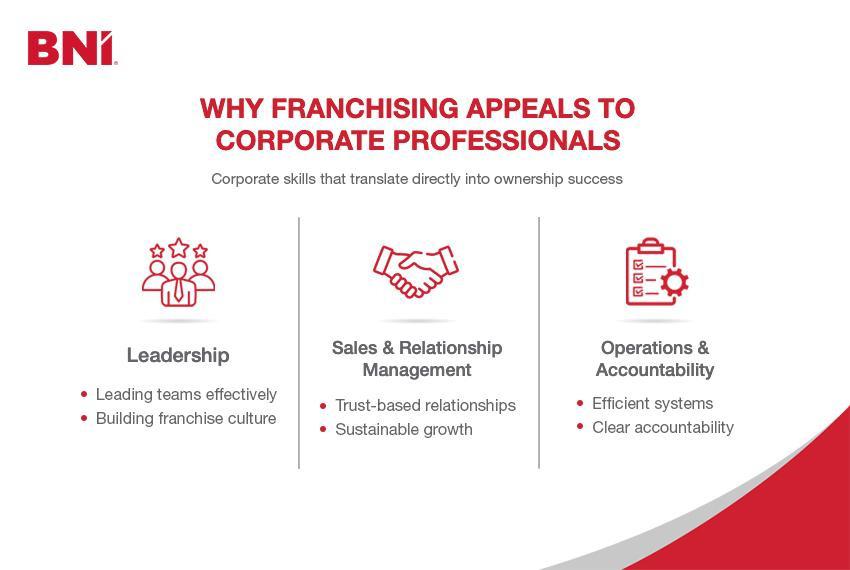
It is no coincidence that many successful franchise owners come from corporate backgrounds. The skills honed in a corporate environment translate exceptionally well to business ownership.
-
Leadership: Experience managing teams and navigating organizational dynamics is crucial for building a strong franchise culture.
-
Sales and Relationship Management: The ability to build trust and maintain professional relationships is the bedrock of any successful business.
-
Operations and Accountability: Understanding how to run efficient processes and hold teams accountable ensures the business runs smoothly.
For those looking to own a franchise after corporate life, the transition can feel less risky than starting a business from scratch. You are applying your existing skillset to a verified business model. It is a strategic career pivot rather than an emotional leap into the unknown. You aren’t guessing if the product works; you are focusing on executing the plan.
Where BNI Fits Into the Conversation
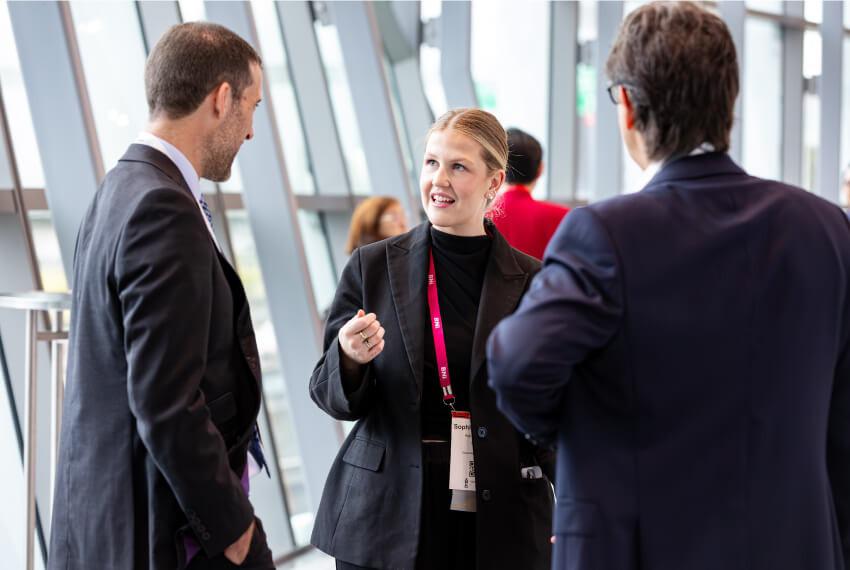
Within the landscape of franchise opportunities, BNI offers a unique proposition for experienced professionals. It aligns with those who understand that relationships drive business.
BNI operates on a relationship-driven business model. It isn’t about selling a physical product or managing a complicated supply chain. It’s about facilitating growth for other businesses through structured, professional networking. This model typically involves low overhead and a scalable, recurring revenue structure, making it an attractive option for those who value efficiency and connection.
Furthermore, BNI offers a built-in network and a global support system. You aren’t operating in isolation. You become part of an organization with decades of proven results across 76+ countries. It’s important to reinforce that running a BNI franchise is a serious business endeavor, not a side project. It requires leadership, strategic thinking, and a commitment to helping local businesses succeed. For the right leader, it offers a powerful way to leverage years of professional experience into a tangible asset.
Choosing the Path That Fits Your 2026 Vision
As you plan for 2026, the choice between a corporate career and franchise ownership comes down to your personal goals. What is your risk tolerance? What lifestyle do you envision for yourself and your family?
If you value the predictability and structure of a corporate role, that path remains a valid and respectable choice. However, if you are seeking greater autonomy, the ability to build equity, and a direct correlation between your effort and your earnings, franchising is a viable, proven alternative. It is not a fallback for those who leave corporate life; it is a step forward for those ready to build something of their own.
Making this decision requires intentionality. Don’t wait for burnout or a corporate restructuring to force your hand. Proactive planning allows you to move toward a future that excites you.
If you are ready to discuss what this transition could look like for you, schedule a discovery call to see if franchise ownership aligns with your 2026 goals