

For many accomplished sales leaders, coaches, and consultants, there comes a moment of clarity. You’ve built a career on influence, trust, and results. You know how to guide decisions, create momentum, and connect the right people at the right time. Your reputation opens doors, and your expertise commands attention.
Yet even at a high level of success, there’s often a ceiling. Revenue is still closely tied to your personal time and presence. When you’re actively consulting or selling, income flows. When you pause, it slows. The skills are powerful, but the structure limits scale.
That’s why many relationship-driven professionals begin to explore business ownership. Not just ownership for ownership’s sake, but ownership that allows their influence to extend beyond individual transactions. The challenge is that many traditional franchise models are built around operations, inventory, or labor-intensive management, areas that don’t fully leverage the strengths of experienced sales leaders and coaches.
The most compelling franchise opportunities for this audience take a different approach. They are built around relationships, credibility, and community leadership. Instead of asking you to change how you lead, they turn your existing strengths into the foundation of a scalable business.
What Sales Leaders, Coaches & Consultants Do Best
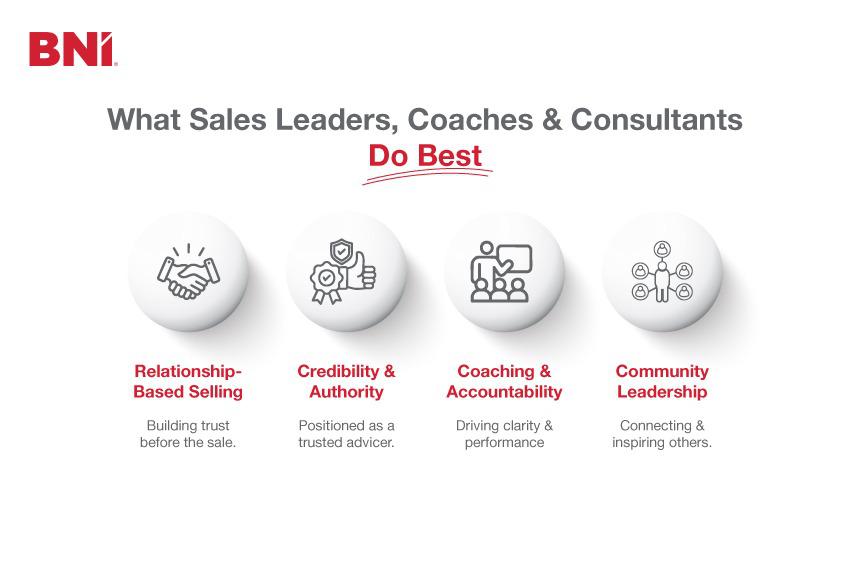
Before evaluating franchise models, it helps to step back and identify what truly drives success in sales and consulting careers. High performers rarely excel because of process management or operational detail. They succeed because they consistently demonstrate a distinct set of transferable strengths:
-
Relationship-based selling: You understand that trust precedes transactions, and long-term value is created well before any agreement is signed.
-
Credibility and authority: You know how to position yourself as a trusted advisor rather than a vendor competing on price.
-
Coaching and accountability: You create environments where people perform better because of clarity, structure, and support.
-
Community leadership: You naturally connect people, recognize opportunity, and foster collaboration.
In many franchise models, these strengths are secondary. In the right franchise model, they are central. The best franchises for sales professionals don’t redirect your talent, they amplify it.
Why Relationship-Driven Franchise Models Stand Out
When evaluating franchise opportunities through this lens, relationship-driven models rise to the top. Unlike transactional businesses that depend on high-volume, one-time purchases, relationship-based franchises are designed for sustained engagement.
These businesses often deliver intangible value: access, education, structure, or outcomes over time. Growth is fueled by trust, referrals, and consistency rather than constant advertising or foot traffic. For sales leaders and consultants, this model feels intuitive. You already understand that retention, reputation, and referrals are the real drivers of long-term success.
Relationship-first franchises reward steady leadership and credibility. As the network deepens, the business strengthens. Instead of value depreciating through equipment or inventory, it compounds through relationships and reputation.
Community-Based Businesses Create Built-In Momentum
One of the most effective expressions of a relationship-driven franchise is the community-based model. In these businesses, the franchise owner doesn’t simply deliver a service, they lead an ecosystem.
Community-based franchises address a familiar challenge for consultants and sales professionals: constant client acquisition. When a business is built around a community, retention becomes the engine. Members remain engaged because the value comes not only from the franchise owner, but from the collective experience itself.
BNI is a clear example of this approach. Built entirely around professional relationships and referrals, BNI franchise owners focus on leading chapters, facilitating connections, and helping local businesses grow. Rather than chasing individual transactions, franchisees create environments where results are generated consistently. The success of the business flows from the strength of the community.
Credibility Is the Currency, Not Cold Outreach
Experienced sales leaders and consultants understand the difference between effort and leverage. The most effective franchise models respect that distinction.
In credibility-driven franchises, owners enter markets as leaders, not prospectors. The role shifts from pitching to facilitating, from convincing to guiding. Your background becomes an accelerant, allowing you to establish authority quickly and build trust at scale.
Over time, that credibility compounds. Your standing in the local business community becomes an asset that continues to generate value, even when you’re not directly involved in every interaction. The business grows because of reputation and structure, not constant manual effort.
Coaching, Not Managing: A Better Use of Leadership Talent
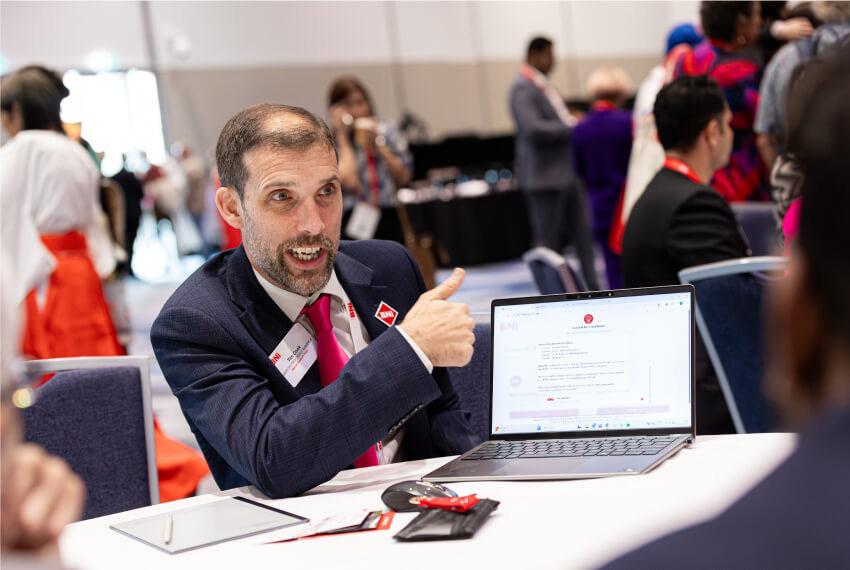
There is an important distinction between managing operations and coaching people. Management often centers on logistics and oversight. Coaching focuses on development, performance, and outcomes.
Many sales leaders thrive in franchise models that emphasize coaching over control. In these environments, you work with other professionals and business owners who are invested in their own success. Your role is to guide, support, and hold them accountable within a proven framework.
This allows you to stay aligned with your strengths—mentoring, strategizing, and leading—while the system handles consistency and structure.
Scalability Without Losing the Human Element
One common concern among consultants is scalability. One-on-one work naturally limits growth. Franchising, on the other hand, can feel impersonal if not designed carefully.
Relationship-based franchises bridge this gap. They scale through systems, leadership development, and repeatable frameworks. Rather than being the bottleneck, the franchise owner becomes the architect, building structures that allow others to lead effectively while maintaining culture and standards.
This shift marks the transition from being highly paid for expertise to owning a business that grows independently of individual hours worked.
What to Look for in a Franchise If You’re a Sales Professional
When evaluating franchise opportunities, consider the structural elements that determine long-term fit:
-
Does the model reward relationship-building and retention?
-
Is credibility a driver of growth?
-
Is there recurring revenue tied to ongoing value?
-
Does the role emphasize leadership and coaching rather than operational management?
-
Are you building a transferable, long-term asset?
These questions often matter more than upfront costs or surface-level branding.
Why BNI Fits Sales Leaders, Coaches & Consultants Particularly Well
Viewed through this framework, BNI stands out as a franchise model aligned with relationship-driven professionals. It is an active ownership model built around leadership, community development, and consistent outcomes.
For sales leaders and consultants, the transition feels natural. As a BNI franchise owner, you expand your impact, building chapters, mentoring leadership teams, and facilitating meaningful business connections across your region. Your influence becomes infrastructure, and your ability to connect people becomes a core business asset.
With a membership-based model, the focus remains on long-term value, retention, and performance, principles that experienced sales professionals already understand deeply.
Turn Relationship Capital into Business Ownership
Moving from sales or consulting into franchise ownership doesn’t require reinvention. It requires alignment. The most effective franchise models recognize that trust, leadership, and community are not soft skills, they are strategic advantages.
Franchising simply provides leverage. By choosing a model designed around relationships rather than transactions, you can build a business that scales while remaining deeply human. For professionals who believe that strong relationships drive lasting results, the right franchise model transforms experience into enduring value.
For sales leaders, coaches, and consultants considering business ownership, the most important step is choosing a model aligned with how you already lead.
Learn more about the BNI franchise model, or explore available territories to see where opportunities exist.