

When people talk about scale in franchising, the conversation usually centers on size. More locations. More units. More activity. Growth is measured by how quickly a system can expand.
But size and sustainability are not the same thing.
As more professionals evaluate franchise ownership with a long-term lens, a different question is emerging: How does this business hold up as it grows? Community-based franchises answer that question differently. Rather than scaling through expansion alone, they are designed to scale through participation, leadership, and retention, creating growth that is not only measurable, but durable.
This distinction is why community-based franchise models are increasingly appealing to experienced professionals who value consistency, resilience, and long-term asset creation.
The Traditional Franchise View of Scale
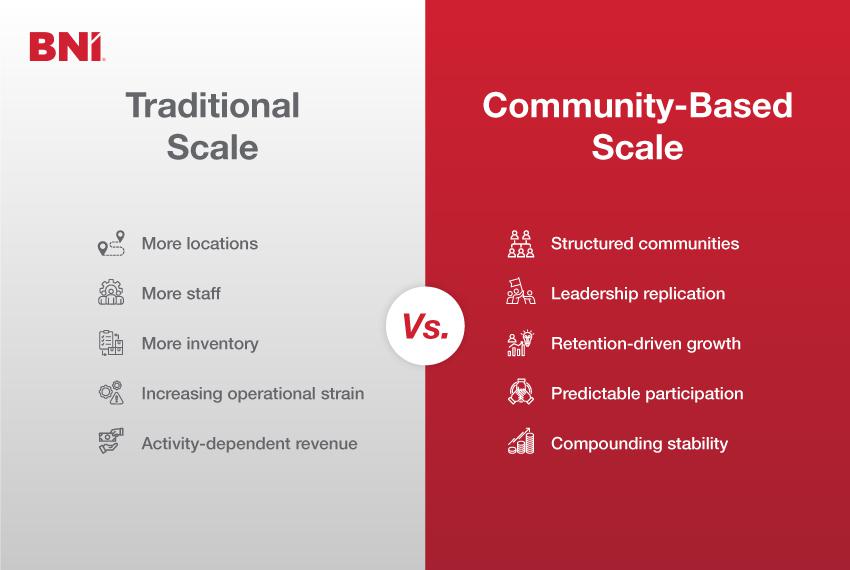
Most traditional franchise models scale by adding operational layers. Growth typically means more locations, more staff, more inventory, and more moving parts to manage. While this approach can be effective, it often introduces new strain as systems expand.
As volume increases, maintaining consistency becomes harder. Culture can dilute, and oversight becomes more demanding. The business grows larger, but it also becomes more fragile, dependent on a continuous level of activity just to maintain momentum.
This isn’t a flaw so much as a structural reality. When growth depends primarily on constant external input, the system must work harder over time to sustain itself.
How Community-Based Franchises Redefine Scale
Community-based franchises operate on a different premise. Scale is not defined by how much activity occurs, but by how deeply the system is adopted and sustained.
In these models, growth is driven by engagement rather than expansion alone. A new community, chapter, or group adds value not simply by existing, but by participating within a consistent framework. The strength of the model comes from shared standards, recurring interaction, and collective outcomes.
Instead of asking, How fast can we grow? community-based franchises ask, How well does this system perform as it grows? That shift in focus changes everything from leadership roles to long-term stability.
Why Retention Is the Foundation of Sustainable Growth
One of the clearest advantages of community-based franchising is the role retention plays in stability.
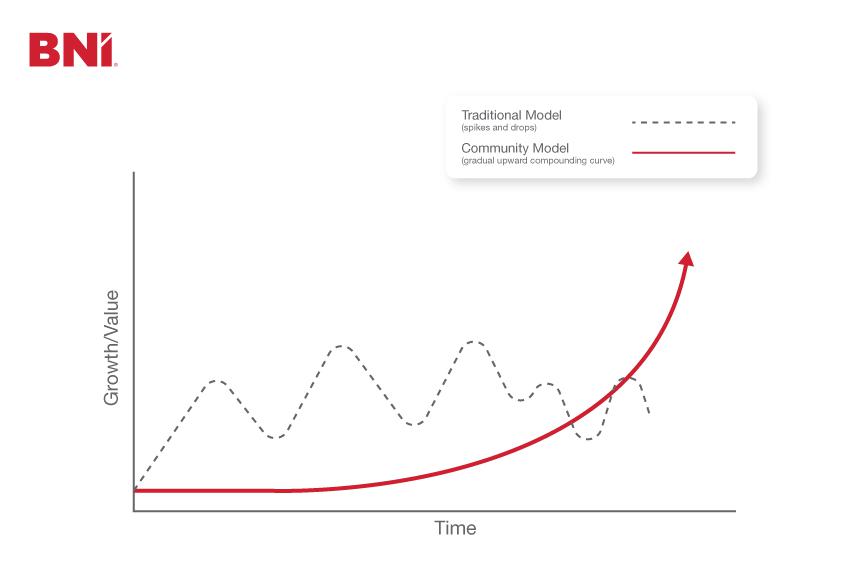
In many businesses, such as home services or food franchises, each period begins with pressure to generate enough new bookings or orders just to keep revenue steady. Any disruption can create immediate strain. Community-based franchises, by contrast, are built around ongoing participation. Members stay engaged because the value they receive increases over time.
As relationships deepen and trust strengthens, outcomes improve. That improvement reinforces participation, which in turn stabilizes the business. Growth becomes additive rather than reactive.
Retention also supports predictability. When participation is consistent, franchise owners can plan with greater confidence, invest more thoughtfully, and focus on long-term development rather than constant replenishment.
Leadership Replication: The Real Scaling Mechanism
Community-based franchises do not scale by relying on a single individual. They scale by replicating leadership.
Rather than centralizing execution, these models are designed to develop capable leaders at the local level. Clear expectations, training frameworks, and accountability structures allow new communities to form without reinventing the system.
This approach reduces dependency on the franchise owner as the sole driver of success. As leadership capability spreads, the business becomes more resilient and less vulnerable to bottlenecks. Growth is supported by people who understand not just what to do, but why the system works.
For experienced professionals, this model aligns naturally with how they already lead, through guidance, standards, and influence rather than control.
Systems Create Consistency, Community Creates Resilience
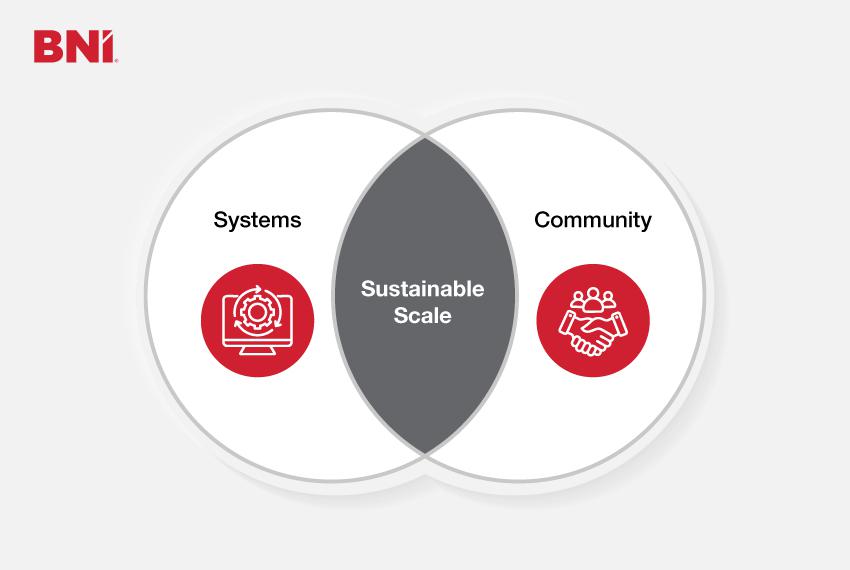
Strong systems are essential to scale. They ensure consistency, protect quality, and provide clarity as a franchise grows. But systems alone do not sustain engagement.
Community is what gives systems staying power.
In community-based franchises, people don’t just follow processes, they participate in something larger than themselves. Shared purpose, peer accountability, and collective success reinforce behavior in ways that rules and guidelines alone cannot.
This combination of structure and human connection creates resilience. When markets shift or challenges arise, the community absorbs change more effectively than a purely volume-driven, transactional system ever could.
A Real-World Example of Scalable, Community-Based Growth
A clear example of this model in practice is BNI.
BNI operates through a globally consistent framework supported by local leadership. Its franchise model is built around professional communities where participation drives outcomes. Chapters follow structured systems, yet remain rooted in local markets and relationships.
Scale is achieved not by centralizing control, but by enabling leaders to execute consistently within a proven structure. The result is growth that preserves culture, standards, and engagement, even across diverse regions.
Scaling Without Losing the Human Element
One of the most common concerns about growth is whether it dilutes connection. Community-based franchises address this by making the human element part of the design.
Clear standards define expectations. Leadership development ensures continuity. Community norms reinforce behavior. Together, these elements allow the business to expand without losing what made it effective in the first place.
Growth becomes intentional rather than reactive, guided by design instead of speed alone.
What This Means for Franchise Owners
For franchise owners, this model changes the nature of scale. Growth is no longer tied to working more hours or managing increasing layers of complexity. Instead, owners move into strategic leadership roles focused on development, alignment, and long-term planning.
Because the system supports participation and leadership at multiple levels, owners are able to think beyond immediate execution. The business becomes an asset built for endurance, not just momentum.
Built for the Long Term
Community-based franchises scale differently because they are designed to. By prioritizing engagement, leadership replication, and retention, they create growth that strengthens rather than strains the system.
For professionals evaluating franchise ownership with sustainability in mind, this model offers a compelling alternative. It reflects a broader shift in how businesses grow and why the most resilient systems are built not just to expand, but to endure.