


When the economy contracts, most businesses brace for impact. Retail locations close. Discretionary spending dries up. Investments get shelved. And many franchise systems — built around consumer spending, physical foot traffic, or inventory — feel the pressure almost immediately.
But not every franchise operates that way. A select few are structured around something that doesn't evaporate when markets tighten: the human need to build relationships, generate referrals, and grow a business. These are the franchises that don't just survive recessions — they continue to expand through them. BNI is one of them, and more than 40 years of uninterrupted global growth is the evidence. During some of these times, BNI actually grows even faster, because small businesses are ultimately what runs the economy.
BNI's Track Record: 41+ Years Of Sustained Growth
BNI was founded in 1985. Since then, it has expanded through multiple recessions, global disruptions, pandemics, and dramatic shifts in how professionals work and connect. Through each of those periods, BNI grew. 
That is not a coincidence. It is the product of an established global model built around something recession-resilient by design: structured referral networking.
When businesses face economic headwinds, the instinct is to protect relationships, deepen partnerships, and focus on the most reliable sources of new business. Referral networking sits at the center of that response. BNI chapters become more essential, not less, when the economy creates uncertainty. Members lean on the community more, not less, when pipelines need reinforcement.
The result is a franchise model that has demonstrated staying power across decades and across dramatically different economic climates. For ambitious entrepreneurs evaluating franchise opportunities, that track record matters enormously.
What Makes a Franchise Truly Recession-Resilient?
The term "recession-resilient" gets used loosely. But when applied with precision, it describes a business model that holds its value — and its relevance — regardless of economic conditions.
Recession-resilient franchises tend to share a few defining characteristics. They address a persistent need rather than a discretionary one. They operate with low overhead, so margins remain healthy even when revenues face temporary pressure. And they generate recurring revenue rather than relying on one-time transactions that can evaporate when consumer confidence drops.
The franchises that struggle most during downturns are typically those tied to discretionary spending, retail traffic, or high-cost operations. The franchises that endure are those aligned with enduring human behavior — behavior that doesn't pause because the economy has.
For business professionals, referrals and relationships are not a luxury. They are survival. When conditions get harder, the need to generate consistent business through trusted networks gets stronger, not weaker.
Why the BNI Model Is Designed to Endure During Economic Slowdowns
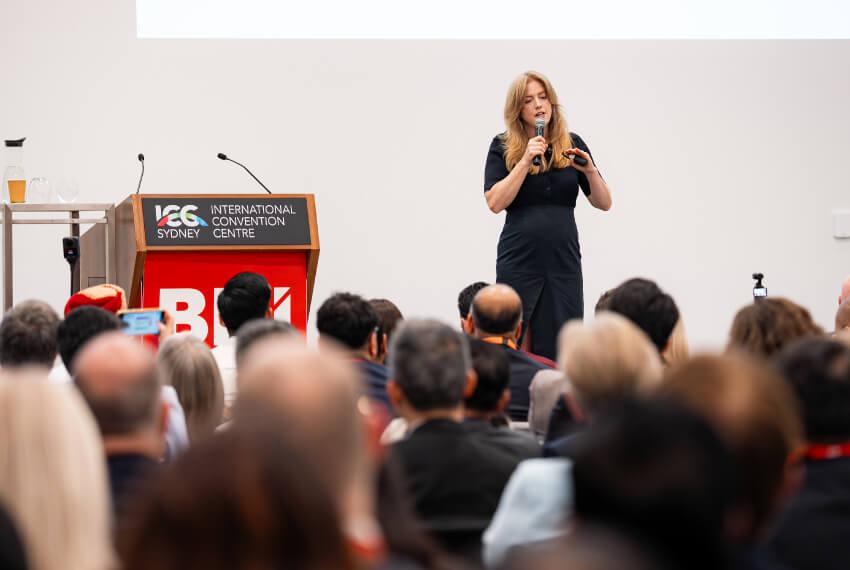
The durability of the BNI franchise model comes down to its fundamentals.
BNI operates on a membership-based structure, which creates recurring revenue for franchise owners rather than dependence on transaction volume. Members commit to their chapters on an ongoing basis, which means the revenue base is built on sustained participation rather than one-time sales that vanish when discretionary spending tightens.
The model also benefits from low overhead operational cost. There is no physical storefront to maintain, no inventory to manage, and no supply chain to navigate. The business is built around people and systems — both of which travel well through economic turbulence.
And unlike many franchise models that are dependent on the right economic conditions to perform, BNI's core product — a built-in community that accelerates growth — becomes more valuable when economic conditions are difficult. When the economy slows, professionals need business more, while resources are lite, so they naturally invest in the tools and networks that help generate more revenue.
What 41 Years of Growth Actually Proves
It is one thing to describe a model as resilient. It is another to point to four decades of uninterrupted expansion as the demonstration.
BNI's growth through the economic disruptions of the early 1990s, the dot-com collapse, the 2008 financial crisis, and the global challenges and pandemics of the early 2020s tells a consistent story. The largest referral network in the world did not contract during those periods — it expanded. New chapters started. Membership grew. The global footprint extended.
This is what separates BNI from franchises that describe themselves as recession-resilient without the evidence to support it. BNI's history is the evidence.
For prospective franchise owners evaluating long-term opportunity, this distinction is critical. Choosing a franchise in a stable period is relatively straightforward. Choosing one that has demonstrated its ability to grow through instability is a different and more meaningful benchmark.
The Right Opportunity for the Right Moment

Recessions reveal which business models were built to last and which were built for favorable conditions. After more than 41 years of consistent global growth, BNI has answered that question clearly.
The combination of a mission-driven purpose, recurring revenue, best in class support, and a model that becomes more essential — not less — during economic downturns positions BNI as one of the most enduring franchise opportunities available. For professionals who are serious about building something with staying power, that combination is worth careful consideration.
If you're ready to explore a franchise backed by a proven model and decades of resilience, take the next step.
Start Your BNI Franchise Journey — Fill Out Our Interest Form Today