

BNI is the most recognized name among small business owners, and specifically in referral networking, but a lot of people who search "is BNI a franchise" or "BNI CEO" are surprised to learn it's also a franchise business, one that individual owners operate in markets around the world. If that's what brought you here, this is the rundown: what BNI as a franchise actually is, who tends to own one, and what makes the model different from franchising in general.
BNI Operates as a Franchise in Most Markets
Most of the regions where BNI operates are run by independent franchise owners, not by BNI's corporate team directly. BNI Global creates and sets the strategy for the brand, the training, the technology, and the referral system itself to franchise owners who build and run it in their local market, the standard franchisor-franchisee relationship behind most recognizable franchise brands, just applied to a professional referral network rather than a storefront. A handful of countries and regions are run corporately rather than franchised, but the majority of BNI's global footprint has been built by individual franchise owners investing in their own markets.
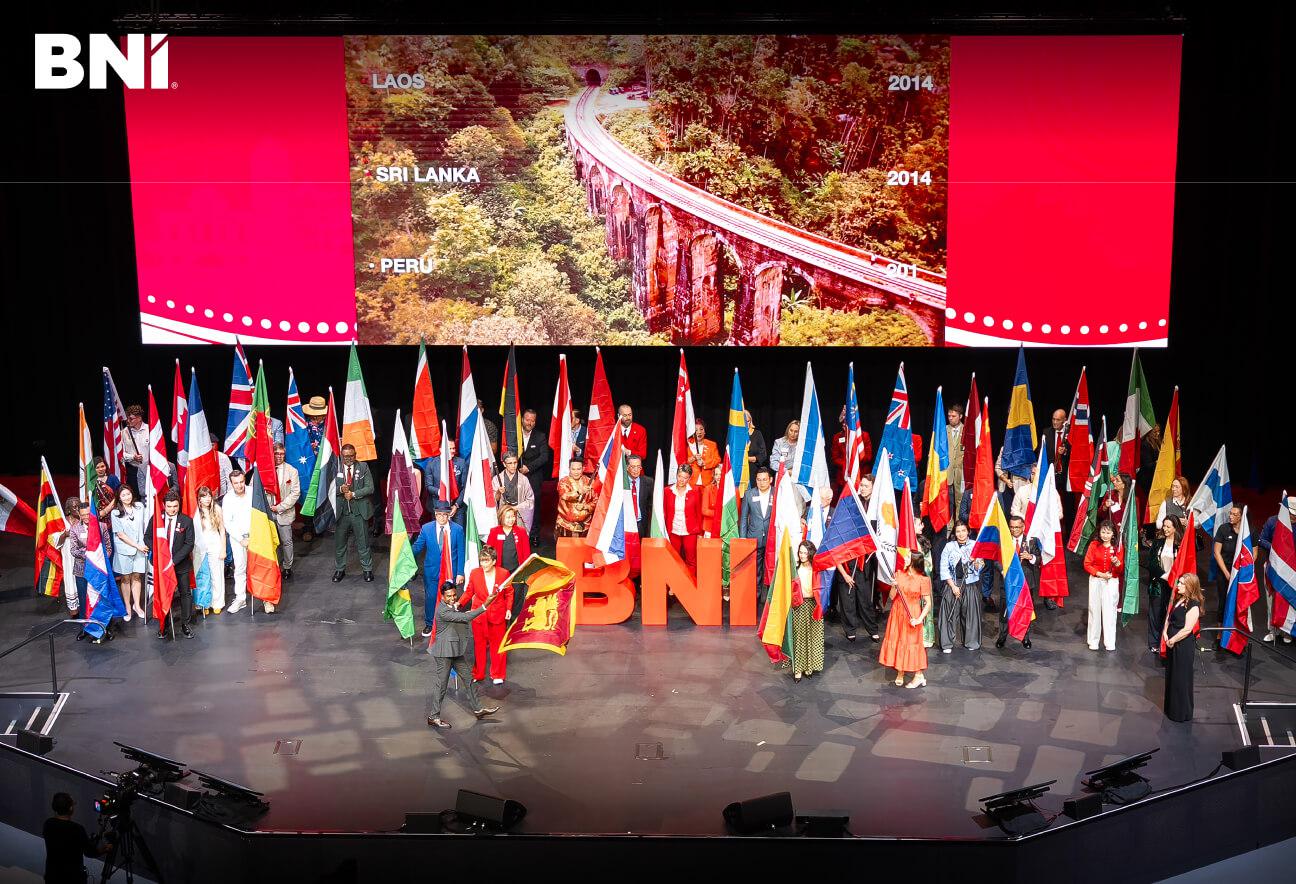
BNI was founded by Dr. Ivan Misner in 1985, and the franchise side of the business has been refined for more than four decades since, growing to a presence in more than 78 countries. We are proud to say we have over 40 years of growth.
A Lot of BNI Franchise Owners Started as Members
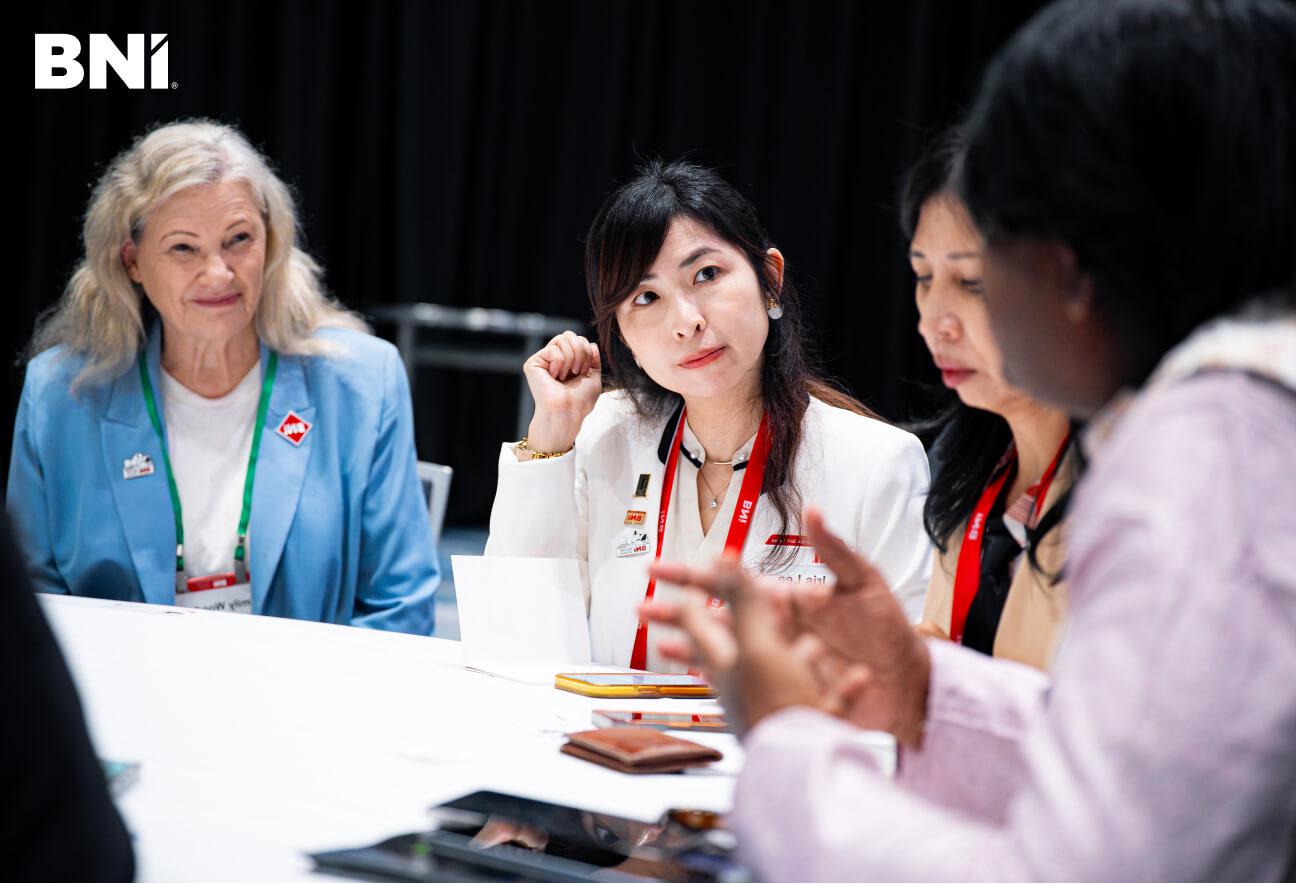
One detail that tends to surprise people researching the brand: BNI Franchise ownership isn't dominated by outside investors with no prior connection to the organization. A significant share of current owners started out as BNI Members themselves, sat in the weekly meetings, built their own referral relationships, and eventually made the move from participating in the system to owning it.
That path makes sense once you look at what the role actually requires. Running a BNI Franchise is about leading a professional community, not managing a storefront or a crew of hourly employees, and Members already have a head start on understanding how the system works, what makes a Chapter succeed, and what it takes to keep people engaged.
It's a B2B, Low-Overhead, Recurring-Revenue Model
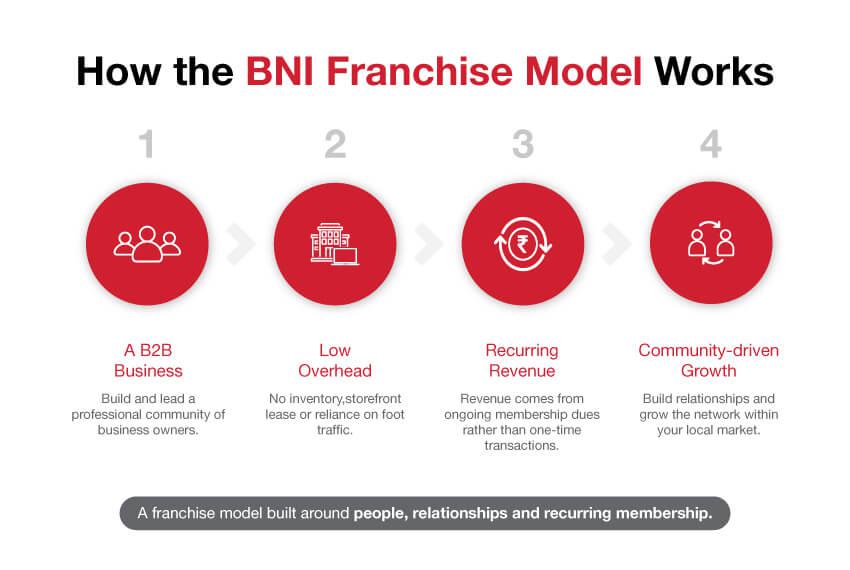
BNI Franchise owners aren't selling to individual consumers. They're building and leading a professional membership community, and the business itself reflects that. There's no inventory to hold, no storefront lease, no reliance on foot traffic. Revenue comes from recurring membership dues rather than one-time transactions, which means the business tends to compound as the network matures rather than resetting with every sales cycle.
That combination, low overhead paired with recurring revenue, is part of why BNI is frequently cited as one of the stronger examples of a B2B franchise model.
The Track Record Behind the Brand
BNI's scale is larger than most people expect. The organization operates in more than 78 countries through tens of thousands of Chapters. Markets like India alone report more than 73,000 Members across 1,500+ locations. Most of that growth has come from individual franchise owners building in new territories one region at a time over four decades, rather than from corporate expansion alone.
For the full country-by-country picture, How Many Countries Is BNI In? Inside BNI's Global Franchise Footprint breaks down where BNI currently operates and where territory is still available.
Who the Model Tends to Fit
BNI isn't looking for investors chasing the next passive income stream. The owners who tend to succeed are passion-driven people who genuinely want to make a difference in their community, people who care about helping local business owners grow, who find real satisfaction in watching a room of strangers become a network that actively looks out for each other. The business side, the recurring revenue, the low overhead, matters, but it's built on top of that motivation, not instead of it.
That's part of why so many owners come from inside the organization. As a Member, you see the value, the benefit, and the impact BNI can make firsthand, week after week: the referral that came through at exactly the right time, the relationship that turned into a client, the local business that grew because the network around it did too. Members who've lived that firsthand often already have the mindset the role calls for, because they've already seen what the model makes possible before they ever consider owning it. If that sounds like you, From BNI Member to Franchise Owner walks through what that path looks like in practice.
The Bottom Line
BNI is a franchise across most of its 78 countries, with BNI Global setting the brand and strategy and individual owners building it in their local markets. It's a B2B, membership-based model with four decades of track record behind it, and it tends to reward owners who are in it for more than the business model, people driven to make a real difference in their community. A notable number of its owners came up through the organization as Members first, which is often the biggest head start there is.
Curious what it takes to own a BNI Franchise?
Start a conversation with our franchise development team